


.webp)
Many companies are starting to talk about artificial intelligence as if it were an inevitable trend. And, in a way, it is. But there is an important difference between talking about AI and actually implementing it.
It is not enough to integrate an artificial intelligence platform just because it is trending or because the market is putting pressure on you. The strategic question has changed:
How much is your company losing by not using AI in its key processes? How many decisions are still being made without data? How much time is being wasted on tasks that could be automated?
Recommended reading: How to Turn AI into an Opportunity for Your Company?
In an environment where efficiency, personalization, and speed make all the difference, artificial intelligence becomes a direct competitive advantage. Especially now, with the evolution toward agents: systems that not only analyze, but also execute, recommend, and act autonomously within business processes.
According to information from OpenAI, a company can save between 40 and 60 minutes per active employee per day with the implementation of an AI agent.
With this context in mind, we created this guide with 5 benefits of implementing artificial intelligence in your company, not only to help you understand what it means to incorporate it into your processes, but also the real impact it can have on your business.
What Does Implementing Artificial Intelligence in a Company Mean?
Before talking about the benefits, it is important to clarify something:
Implementing artificial intelligence is not about installing a tool; it is about redesigning how your company operates.

Many organizations believe they are using AI because they integrated a chatbot or automated a report. But that is only the surface.
True implementation involves:
- Integrating data from different sources
- Analyzing behaviors, for example: AI analysis user behavior optimization recommendations
- Automating operational decisions
- Creating systems that learn and improve over time
And, increasingly, it means building intelligent agents.
What Does Agentization Mean in a Company?
AI agents are artificial intelligence systems that do not just respond. They also:
- Detect patterns.
- Propose actions.
- Execute tasks without constant intervention.
Think about it this way:
Having a dashboard that tells you what is happening is not the same as having a system that detects a drop in conversions and automatically adjusts a campaign, sends an alert, and recommends changes. That is agentization, and that is where the real value begins.
Benefit 1: Automating Repetitive Tasks
One of the first impacts of artificial intelligence is freeing up time.
But this is not just about doing what you already do faster. It is about completely eliminating tasks that should not be manual in the first place.
Think about processes such as:
- Lead classification
- Answers to frequently asked questions
- Report generation
- Data validation
- Initial sales follow-up
Many of these tasks consume hours of your team’s time every week.
Now imagine a system managing them automatically, with defined criteria and continuous learning.
This is where intelligent agents begin to take center stage. Because they do not just execute an action. They can also:
- Prioritize tasks
- Adapt to new patterns
- Scale without increasing operational costs
The result is not just efficiency. It is total focus, because your team stops operating as an executor and starts working as a strategist.
Benefit 2: Improving Operational Productivity
Many companies try to improve productivity by hiring more people or implementing more tools.
But the problem is not always capacity. It is the way work gets done.
Artificial intelligence makes it possible to optimize complete processes, not just individual tasks.
For example:
- Marketing teams that automate segmentation and personalization
- Sales teams that prioritize prospects with a higher probability of closing
- Operations teams that detect bottlenecks in real time
Here, the key is not just automation. It is orchestration.
A well-implemented AI system connects areas, reduces friction between processes, and eliminates unnecessary steps from certain tasks.
And when you integrate agentization, something even more interesting happens: systems begin to coordinate actions with one another.
You do not need someone to review every process. The system identifies deviations and acts.
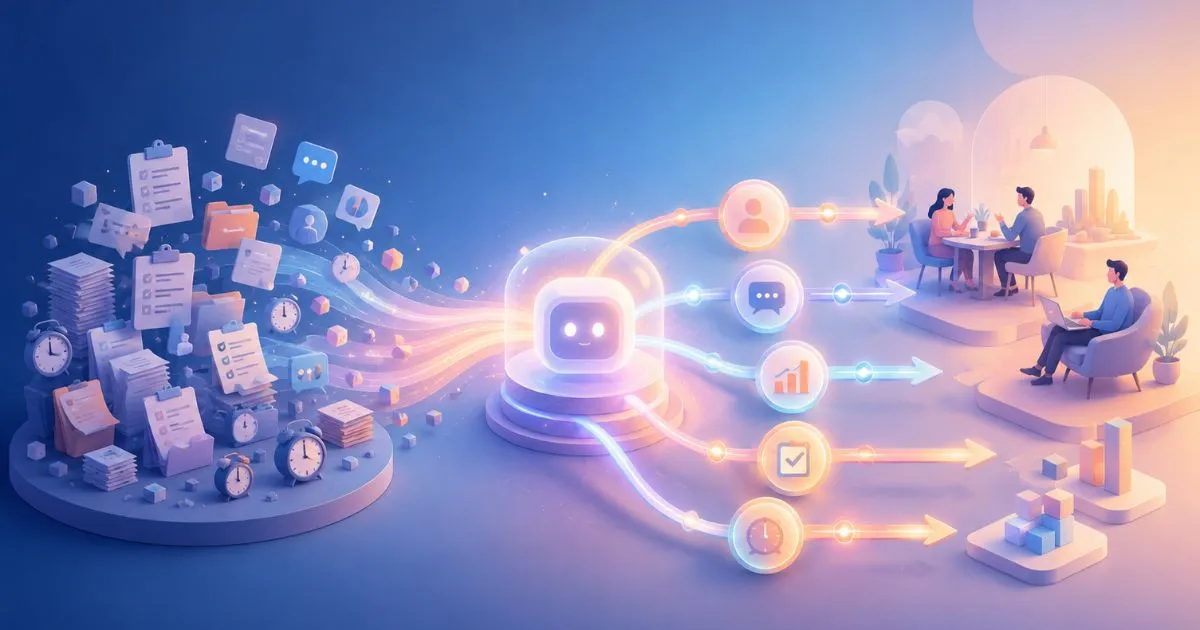
Productivity stops depending on human effort and starts depending on system design. That said, not everything is smooth sailing. A poorly implemented process could even affect your operation, which is why it is important to have expert support.
Benefit 3: Detecting Opportunities Through Data Analysis
One of the most underused assets in companies is information. Data is collected every day, but it is rarely transformed into strategic decisions.
This is where the real power of AI comes in. It does not just analyze data; it finds patterns that are not obvious.
For example:
- It detects changes in user behavior.
- It identifies segments with higher conversion potential.
- It finds opportunities to improve products or services.
- It generates actionable recommendations, or optimization recommendations.
If your website receives consistent traffic but conversions are not growing, a traditional analysis would tell you what is happening. But a well-implemented AI system would tell you:
- Why is it happening?
- What needs to change?
- What impact will that change have?

And when this is combined with agents, recommendations do not stay theoretical. They are executed.
Benefit 4: Improving the Customer Experience
Today, customer experience is not defined only by the product. It is defined by the interaction, and at that point, artificial intelligence has a direct impact.
It makes it possible to:
- Personalize content in real time.
- Adapt interfaces based on behavior.
- Automate customer support without losing context.
- Anticipate user needs.
But there is an important nuance: this is not about replacing human interaction. It is about making it more relevant.
For example:
A system can identify where a user is in the process and offer exactly the information they need. Or it can even activate an agent that:
- Answers specific questions.
- Recommends solutions.
- Supports the decision-making process.
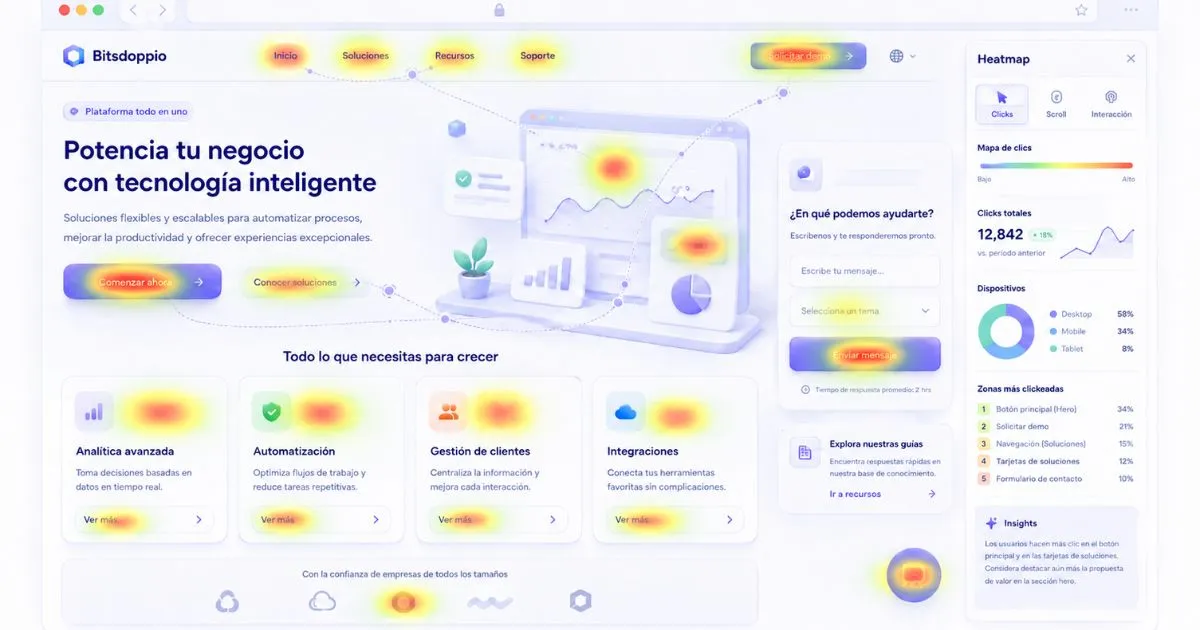
The result is a smoother, clearer experience that is more aligned with user expectations. And that has a direct impact on conversion.
Benefit 5: Accelerating Decision-Making
One of the biggest bottlenecks in companies is not execution. It is decision-making. Long processes, multiple approvals, delayed analyses—all of this slows down growth.
Artificial intelligence changes this scenario. It makes it possible to:
- Analyze information in seconds.
- Simulate scenarios.
- Evaluate risks.
- Prioritize actions.
But the real leap happens with agentization, because it is no longer just about deciding faster. It is about allowing certain operational decisions to be made automatically.
For example:
- Adjustments to digital campaigns
- Resource reallocation
- Activation of sales workflows
- Optimization of internal processes
This does not eliminate human judgment. It enhances it. The team focuses on strategic decisions, while the system manages the operational side.
What You Need to Implement AI Realistically
This is where many companies fail: they believe that implementing artificial intelligence is only a matter of budget or technology, when in reality, it is not. More than resources, it is about having clarity and focus on how to apply it strategically within the business.
To do it well, you need:
1. Clear Objectives
Do not implement AI just for the sake of it. Define:
- What problem do you want to solve?
- What process do you want to optimize?
- What metric do you want to improve?
2. Organized and Accessible Data
AI without data will not truly add value, because it will lack context about your operation.
You need:
- Structured information
- Connected sources
- Data quality
3. Defined Processes
You cannot automate what you do not understand, so there must be clarity around how your company operates.
First:
- Document
- Simplify
- Optimize
Then automate.
4. A Progressive Approach
Do not try to transform the entire company all at once. This does not happen overnight, and if someone promises you that it does, proceed with caution.
Start with:
- One process
- One use case
- One specific improvement
Scale from there so you have a clear direction.
5. An Experimentation Mindset
AI implementation is not linear. It is a process of testing, measuring, and adjusting.
Frequently Asked Questions About Implementing Artificial Intelligence
Do I need a large investment to get started?
Not necessarily.
Today, there are multiple tools and platforms that allow companies to start with specific use cases without major development costs.
The key is not the size of the investment, but the clarity of the use case.
Will AI replace my team?
No.
But it will change the way your team works. Operational tasks tend to be automated, while human value becomes focused on strategy, creativity, and decision-making.
What exactly is agentization?
It is the evolution of artificial intelligence toward systems that do not only analyze, but also act.
An agent can detect a problem, propose a solution, and execute it without depending entirely on human intervention.
How do I know if my company is ready to implement artificial intelligence?
If you have repetitive processes, available data, and a need for efficiency, then you already have a starting point.
Implementing artificial intelligence is not a technology decision. It is a business decision. It is not about being “on trend,” but about understanding how to improve the way your company operates, makes decisions, and grows. In an environment where competitors optimize, automate, and learn constantly, the real question is not whether you should implement AI, but how much it is costing you not to.


.png)